
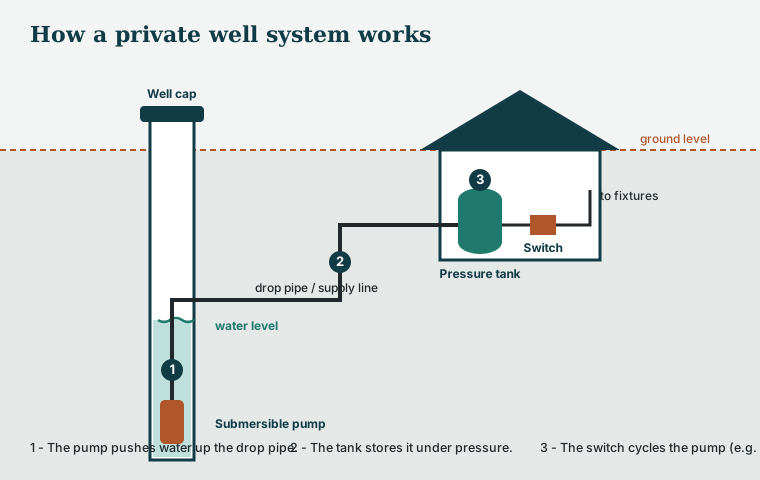
Every private well delivers water through the same chain: a pump pushes water up, a pressure tank stores it under pressure, and a pressure switch tells the pump when to run. When you have no water, low pressure, or a pump that won’t stop, the fault is almost always in one of those three links — and two of them cost under $200 to fix yourself.
Understand your system in 60 seconds
The pump (submersible in the well, or jet pump in the basement) moves water. Typical lifespan: 10–15 years for submersibles. The pressure tank holds 20–80+ gallons under air pressure so the pump doesn’t start every time you open a tap. Typical lifespan: 7–15 years; the usual failure is a waterlogged bladder. The pressure switch is a $25–$60 part that cycles the pump between cut-in and cut-out pressures (commonly 30/50 or 40/60 PSI). It’s the most common failure point in the entire system — and the easiest fix.
Diagnose by symptom
If you are comparing tank sizes, use the pressure tank sizing calculator before replacing parts.
| Symptom | First suspect | Second suspect |
|---|---|---|
| No water at all | Tripped breaker / pressure switch contacts | Failed pump or wiring |
| Pump turns on and off rapidly (short cycling) | Waterlogged pressure tank | Clogged switch nipple |
| Pump runs constantly | Leak or stuck switch contacts | Failing pump losing capacity |
| Pressure drops during showers | Undersized tank / wrong switch setting | Clogged sediment filter |
Full walkthrough: Well pump not working? The complete troubleshooting guide.
Guides in this section
- Well pump troubleshooting: no water, low pressure, and short cycling
- Well Pump Pressure Switch Problems: Symptoms, Causes, and What to Check Safely
- Well Pump Replacement Cost (2026): What You’ll Actually Pay
Safety line
Pressure switches and tanks are homeowner territory: shut off the breaker, relieve pressure, work with a buddy. Pulling a submersible pump from a deep well, or any work inside the well casing or on 240V wiring, is professional territory. Knowing the difference is what this section is for.