
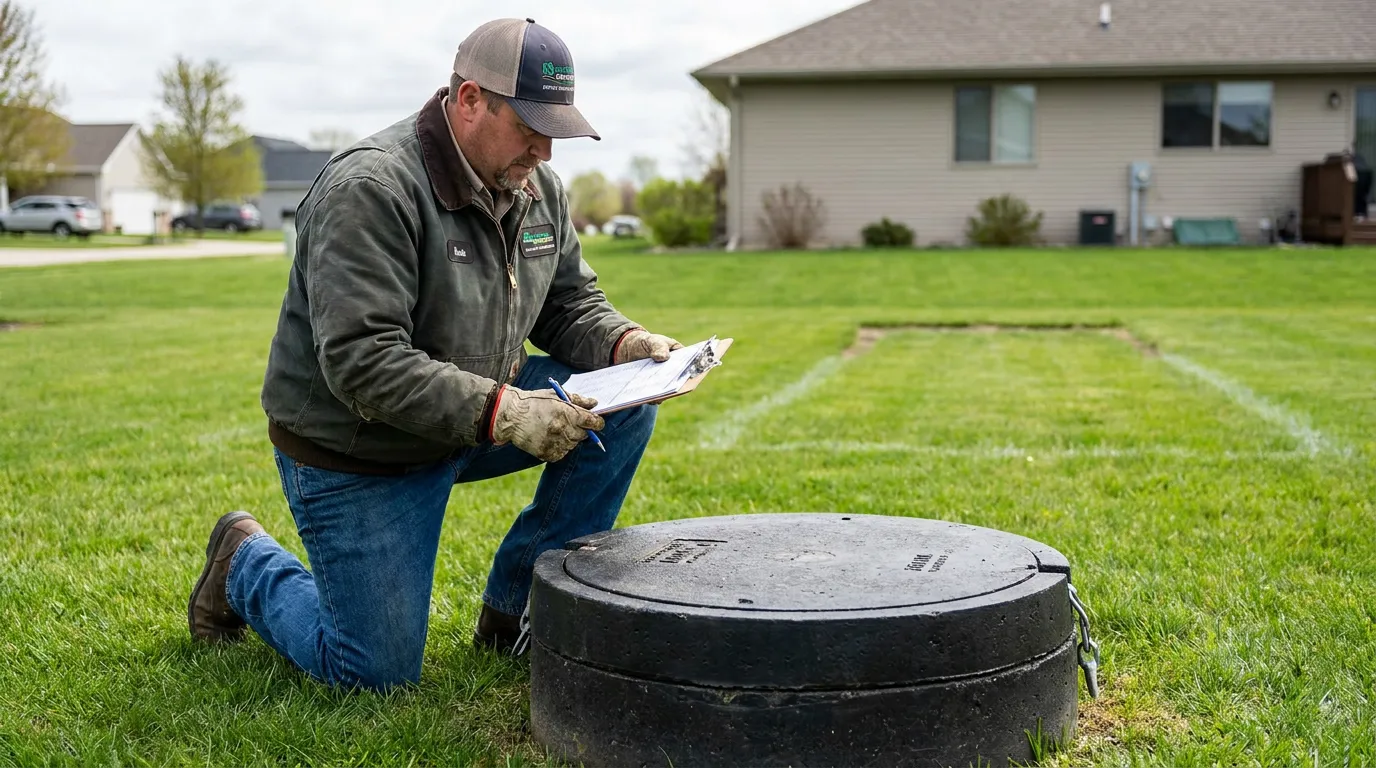
Maintaining a conventional septic system is mostly about protecting it between service visits: use water reasonably, keep inappropriate waste out of the system, protect the drainfield, keep good records, have the system inspected periodically, and pump the tank when solids accumulation calls for it. None of that requires a monthly ritual or a special product.
The U.S. Environmental Protection Agency (EPA) generally advises septic-system inspection on a 1–3-year cadence and says household tanks are typically pumped every 3–5 years, but neither number is a universal countdown. System type, tank size, household use, wastewater volume, solids accumulation, and local requirements can all change the schedule. Advanced systems with pumps, controls, or aerobic treatment equipment can require substantially more frequent and manufacturer- or permit-specific service.
Know What Kind of Septic System You Have
Most of this article is written for the most common setup: a conventional gravity system, with a septic tank draining by gravity into a drainfield. If your property has a pressure-dosed or pump-assisted system, it likely adds a pump chamber, float switches, and an alarm, and may need more frequent attention. An aerobic treatment unit (ATU) or other advanced system adds mechanical and electrical components and typically has its own service schedule set by the manufacturer and your local permit, not by the general guidance below. If you are not sure which system you have, its permit records or a qualified septic service professional can confirm it.
Septic Tank Maintenance Schedule at a Glance
- OngoingWater use • Waste • Drainfield
Continuous habits, not a formal interval - Yearly homeowner reviewRecords • Secure lids • Surface conditions
Practical reminder, not a regulatory requirement - Professional inspectionEPA: generally every 1–3 years; average system at least every 3 years
- PumpingTypically every 3–5 years, or as solids accumulation requires
- System-specific serviceAdvanced systems • Filters • Pumps • Permit/manufacturer schedule
| When | What to Do | Who | Notes |
|---|---|---|---|
| Ongoing | Use water efficiently; spread large water uses out when practical; flush only appropriate waste; protect the drainfield; notice leaks, odors, drainage changes, standing water, or an active alarm. | Homeowner | Everyday habits, not a formal service – this is the foundation everything else builds on. |
| Once a year | Review service and pumping records; check that accessible lids and risers are secure and undamaged; look over the drainfield surface; confirm roof and sump discharge still drain away from the system; note any manufacturer or service reminders. | Homeowner | Practical homeowner reminder – not a universal regulatory interval. |
| Every 1–3 years | Professional inspection: tank/system access as appropriate, sludge/scum assessment, baffle condition, and effluent-filter assessment if one is installed. | Qualified septic service professional | Follow the more frequent schedule required by your system, permit, manufacturer, or local authority. |
| Roughly every 3–5 years, or as needed | Pumping – removing accumulated solids from the tank. | Qualified septic service professional | EPA’s typical range; the actual interval depends on tank size, household size, wastewater volume, and solids accumulation. See our pumping guide and calculator. |
| Manufacturer / permit schedule | Service for effluent filters, pumps, alarms, aerobic treatment units, and other advanced components. | Qualified septic service professional (often under a maintenance contract) | No single national frequency – follow the equipment manual and your local permit. |
Ongoing Habits That Protect a Septic System
Use water efficiently. Fix leaks promptly, use efficient fixtures, and run full loads in the washer and dishwasher. Where practical, avoid creating unusually large wastewater surges when you can spread that use over time, several loads of laundry back-to-back, for example. This gives the tank and drainfield more time to handle the flow instead of pushing solids through faster than the system can settle them.
Your septic system is not a trash can. Toilets are for human waste and toilet paper. Keep out wipes (including anything labeled “flushable”), feminine hygiene products, diapers, condoms, dental floss, paper towels, cat litter, and cigarette butts. Separately, keep coffee grounds, grease and cooking oil, pharmaceuticals, paint, solvents, and other household chemicals out of drains. These materials can clog plumbing, disrupt biological treatment in the tank, or pass through to groundwater.
Does a garbage disposal affect septic maintenance?
Yes. A garbage disposal sends food solids into the tank that would otherwise go in the trash or compost, adding to the load the system has to break down and settle. EPA notes that disposal use can affect how often a tank needs pumping. Rather than putting an unsupported number on that effect, the practical guidance is simple: limit disposal use instead of treating the septic tank as a food-waste system. If pumping frequency is a concern, our pumping guide and its calculator can factor disposal use into a personalized estimate.
Can you use bleach with a septic system?
Normal household use of bleach, disinfectants, and cleaners according to label directions is generally compatible with a septic system. University of Arizona Cooperative Extension notes that such use can kill some beneficial bacteria, but the normal population generally recovers quickly; excessive or cumulative use is the real concern. Use only the amount of soap, detergent, bleach, or cleaner needed for the job.
Avoid chemical drain openers where practical; EPA recommends boiling water or a mechanical drain snake for clogs instead. For a persistent or serious blockage, have the plumbing problem diagnosed rather than repeatedly sending strong chemicals into the septic system. Never pour paint, solvents, or large volumes of harsh chemicals down any drain.
Do Septic Tank Additives Actually Help?
No routine additive is needed for a normally functioning residential septic system. EPA’s Septic Tank Additives Fact Sheet says onsite systems already contain the bacteria, enzymes, yeasts, fungi, and other microorganisms needed to function properly. Biological and enzyme additives are therefore unnecessary for routine maintenance, while some chemical or solvent-based additives can interfere with treatment or harm the system or environment. Washington State University Extension independently reaches the same practical conclusion and cites a study that found no sludge-level benefit from routine bacterial additives.
- Biological, bacterial, and enzyme additives: not needed for routine operation.
- Yeast and other home remedies: no authoritative evidence establishes a routine maintenance benefit.
- Strong alkali or acid drain/tank chemicals: potentially harmful. EPA notes that they can interfere with bacterial treatment and damage pipes, tanks, and other components. Avoid them unless specifically directed in a system-specific professional or regulatory context.
- Organic-solvent-based additives: avoid them. EPA identifies potential risks to soil structure, groundwater, and system performance, and notes that products containing organic solvents are banned in many states.
This does not mean every chemical product automatically causes damage. The narrower, evidence-based point is that routine additive use is unnecessary for a normal system, and a few specific categories are worth actively avoiding. The money and attention are better spent on inspection, pumping, records, and protective daily habits.
Do Septic Tanks Need Monthly Maintenance?
No. A conventional septic system generally does not need a monthly additive, tank-opening routine, or other special monthly treatment. What matters between service visits is ongoing awareness: sensible water use, appropriate waste disposal, and noticing unusual conditions such as slow drains, odors, wet spots in the yard, or a new alarm. Formal service – inspection, pumping, and filter service – happens on the much longer, system-specific intervals described throughout this guide.
What to Review Once a Year?
This is a practical RuralWaterHQ reminder schedule, not an EPA-mandated annual inspection: a simple once-a-year homeowner review can keep records current and surface obvious changes between professional service visits.
- Records. Pull up your last professional inspection, last pumping date, repair records, and any manufacturer or service documentation. If you cannot find them, start a record this year.
- Lids and risers — exterior only. Confirm that accessible lids and risers are intact, in place, and free of obvious damage. Keep them securely fastened. Do not leave an open tank unattended, and do not remove a lid yourself to look inside.
- Drainfield surface. Walk the area and look for standing water, erosion, vehicle tracks or compaction, and new deep-rooted landscaping.
- Water management. Check for plumbing leaks, confirm that downspouts and sump-pump discharge are still directed away from the system, and note unusually high water use.
- System-specific reminders. If you have a pump, alarm, or aerobic treatment unit, check whether a service or contract renewal is coming due.
If your system is buried and hard to locate, do not probe or dig for it. Your local health department, original installer, or a septic professional can typically confirm its location from existing records.
How Often Should a Septic System Be Inspected?
EPA’s FAQ says every 1–3 years, while its main homeowner-care page describes the average household system as needing inspection at least every three years by a septic service professional. Use the 1–3-year range as a baseline and follow the more frequent schedule if your system, permit, manufacturer, or local health authority requires it. Systems with pumps, floats, electrical components, or advanced treatment equipment typically need inspection more often – often annually – and some jurisdictions set stricter requirements.
A professional inspection typically includes tank/system access as appropriate, an assessment of sludge and scum levels, a check of baffle condition, and an assessment of the effluent filter if one is installed. The exact procedure can vary by system design and jurisdiction. This guide deliberately does not walk homeowners through that internal work: it belongs to a qualified septic service professional.
Can you inspect a septic tank yourself?
Partly. Homeowner-level observation is useful and does not require opening anything: watch the drainfield for standing water or unusually green patches, notice odors or slow drains, check that lids and risers look intact from the outside, keep records current, and confirm that an alarm panel (if you have one) is not showing a warning.
Professional internal inspection involves accessing a tank that can present hazardous gases and other confined-space risks. Keep your role to external observation and records. Opening the tank for internal inspection, assessing sludge and scum depth, checking baffles, and evaluating an effluent filter are professional tasks because they require training and equipment and involve serious hazards.
Where Pumping Fits Into Septic Maintenance?
Pumping is one piece of the calendar, not the whole maintenance plan, and this is not the page for the full pumping breakdown. EPA’s general guidance is that household tanks are typically pumped every 3–5 years, but the interval for your property depends on household size, tank size, wastewater volume, solids accumulation, and habits such as garbage-disposal use.
For a personalized frequency estimate, typical pump-out costs, what to expect during the visit, and the fuller list of warning signs that a tank needs attention now, use our Septic Pumping Frequency Calculator and read Septic Tank Pumping: Cost, Frequency, and What to Expect.
What About the Septic Effluent Filter?
Some septic tanks have an effluent filter at the outlet to help keep solids from reaching the drainfield. EPA notes that effluent filters need regular maintenance, but it does not set one universal cleaning interval. Frequency depends on the system, household, and filter design.
Have the filter checked and serviced as part of the system’s normal maintenance schedule, following the manufacturer and any local requirements. Some designs have dedicated ground-level service access, but that does not make every filter a DIY maintenance item. Access, removal, and cleaning vary by product, and doing the work incorrectly can push solids toward the drainfield. The safest default is to address it alongside regular professional service rather than improvise from a general guide.
How to Maintain the Septic Drainfield?
The drainfield is a critical treatment component, and protecting it is one of the most important things a homeowner can do to reduce the risk of system failure.
HOUSE
SEPTIC TANK GRASS / SHALLOW ROOTS DIRECT ROOF WATER AWAY
KEEP VEHICLES OFF
KEEP DEEP ROOTS AWAY
- Keep vehicles off it. Cars, trucks, and heavy equipment compact the soil and can damage buried pipes, interfering with how the field absorbs wastewater.
- Do not build on or alter it without checking first. Structures and impermeable surfaces can block service access and interfere with the field. Check with your local permitting authority or system professional before making changes.
- Keep deep roots away. Grass and other shallow-rooted groundcover are generally appropriate directly over the field. Trees and shrubs with deep or aggressive roots can damage pipes over time. Exact safe distances vary by species, soil, and system design.
- Keep extra water away. Divert roof drains, sump pumps, and surface runoff away from the drainfield; extra water competes with the wastewater the field already processes.
- Watch the surface. Standing water, persistently soggy soil, unusually lush or green patches, or a sewage odor over the field are signs worth reporting promptly to a septic professional.
When This Is No Longer Routine Maintenance?
For a fuller discussion of what these signs can mean, see our pumping and warning-signs guide. If your system has a pump or alarm panel, never ignore an active warning light or alarm; alarm diagnosis belongs to the pump and control system, not to routine tank maintenance.
Conventional Septic vs. Advanced Systems
Everything above is written primarily for a conventional gravity septic tank and drainfield. Advanced or alternative systems – pressure-dosed, pump-assisted, aerobic (ATU), mound, and others – can add pumps, controls, alarms, more frequent inspection requirements, maintenance contracts, or operating-permit obligations, depending on the system and jurisdiction. EPA’s general point is that systems with electrical or mechanical components typically need inspection more often than conventional systems, often annually.
Requirements vary widely by jurisdiction. As one local example, Lee County, Florida, requires permitted ATUs to carry a current operating permit and active maintenance contract, with service from an approved entity at least twice a year and a county inspection at least annually. That is a local rule, not a national ATU schedule. For an advanced system, follow the manufacturer’s manual, service contract, and local health or environmental authority.
Keep a Septic Maintenance Record
EPA specifically recommends keeping septic maintenance records. Good records make it easier to track service history, understand pumping needs, document repairs, and give accurate information to future service professionals or property owners. Save:
- permit or design records, when available;
- tank size and system type;
- a rough site sketch showing the tank and drainfield location;
- inspection dates and findings, including sludge/scum levels recorded by a professional;
- pump-out dates and effluent-filter service records;
- repair history and service-provider contact information; and
- the manufacturer’s manual for any pump, alarm, or aerobic equipment.
If you do not know where the system is or cannot find its history, do not start digging or probing. Your local health department or permitting authority, the previous property owner, original installer, or a septic professional can typically help track it down from existing records.
What Homeowners Should Never Do?
OSHA’s confined-space guidance documents the same categories of atmospheric hazard in workplace settings; OSHA rules govern workplaces, not homeowners, but the hazard principle still applies at home. Do not lean into an open tank or riser for a closer look, never leave a lid or access point open and unattended, and keep children and pets away whenever a lid is open for professional service. The Washington State Department of Health’s lid-safety guidance reinforces the importance of secure, undamaged lids.
Frequently Asked Questions
How do you maintain a septic tank?
Mostly through habits, not DIY tank work: use water sensibly, keep inappropriate waste and chemicals out, protect the drainfield, keep records, and have the system inspected and pumped on the schedule your professional, manufacturer, and permit recommend.
How often should a septic system be inspected?
EPA guidance points to every 1–3 years for a conventional system, with the average household system inspected at least every three years by a septic service professional. Systems with pumps or electrical components typically need inspection more often — often annually.
How often should a septic tank be pumped?
EPA’s typical range is every 3–5 years, but the interval depends on tank size, household size, wastewater volume, and solids accumulation. Use our calculator and pumping guide for a personalized estimate.
Do septic tanks need monthly maintenance?
No. A conventional system does not need a monthly treatment or special routine — just sensible ongoing habits and professional service on a much longer, system-specific interval.
Do I need to add bacteria to my septic tank?
No. EPA says a normally functioning system already contains the microorganisms it needs, and research cited by Washington State University Extension found no sludge-level benefit from routine bacterial additives.
Can you use bleach with a septic system?
Yes, in normal label-directed household amounts. The bacteria population generally recovers quickly; the concern is excessive or cumulative use, not ordinary cleaning. Use only what the job requires.
How do you maintain a septic drainfield?
Keep vehicles off it, avoid building on or altering it without local approval, keep deep-rooted plants away, divert roof and sump water, and watch for standing water, soggy soil, odors, or unusually lush patches.
How often should a septic effluent filter be cleaned?
There is no single universal interval. It depends on the filter and system design. Have it checked as part of regular service, following the manufacturer’s schedule and local requirements.
Can I inspect my septic tank myself?
You can monitor the drainfield, lids, records, and warning symptoms from the outside. Opening the tank and assessing its internal condition is a qualified professional’s job.
Authoritative Sources
- U.S. EPA — How to Care for Your Septic System
- U.S. EPA — Frequent Questions on Septic Systems
- U.S. EPA — Septic Tank Additives Fact Sheet (830-F-24-003)
- University of Arizona Cooperative Extension — Antibacterial Products in Septic Systems
- Washington State University Extension — Septic Tank Additives
- Washington State Department of Health — Septic Tank Lid Safety