
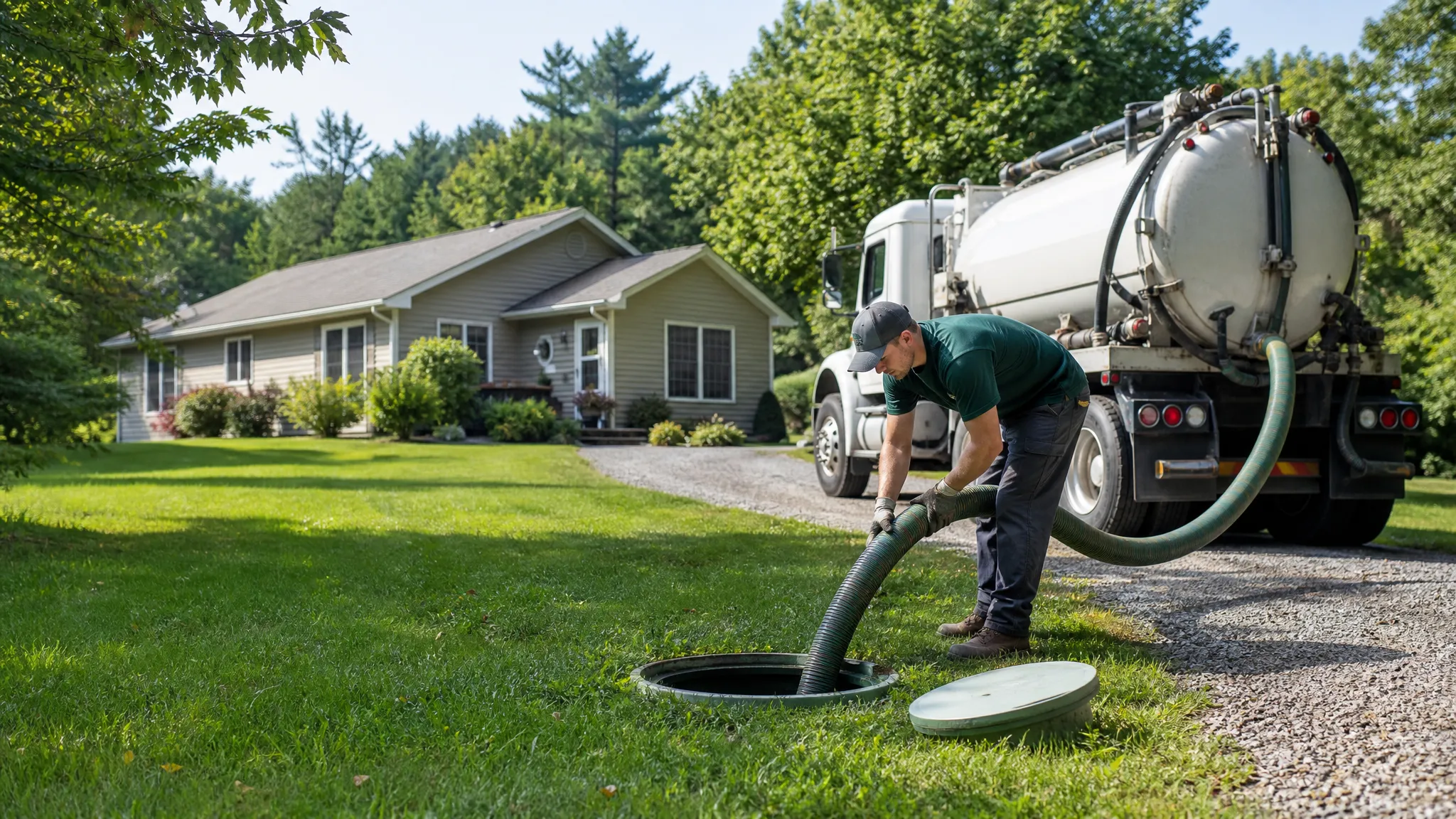
Septic tank pumping cost runs most US homeowners $300 to $600, takes under an hour, and is the single highest-return maintenance dollar a rural home can spend: skipping it is the leading way homeowners convert a $400 service call into a $15,000 drainfield replacement. Here’s what it really costs, how often your household actually needs it, and how to avoid the two classic upsells.
Septic Tank Pumping Cost in 2026
| Scenario | Typical price |
|---|---|
| Standard 1,000–1,250 gal tank, accessible lid | $300–$600 |
| Large tank (1,500+ gal) | $500–$900 |
| Lid must be located and dug up | +$100–$400 |
| Emergency / after-hours pump-out | +$150–$500 |
| Heavy solids / neglected tank requiring extra work | +$100–$300 |
Prices vary by region and disposal fees. One permanent money-saver: if your lids are buried, install septic risers ($100–$300 in parts, DIY-able) during the next pumping — every future visit gets cheaper and faster.
How often should you pump?
For a quick estimate, use the septic pumping frequency calculator.
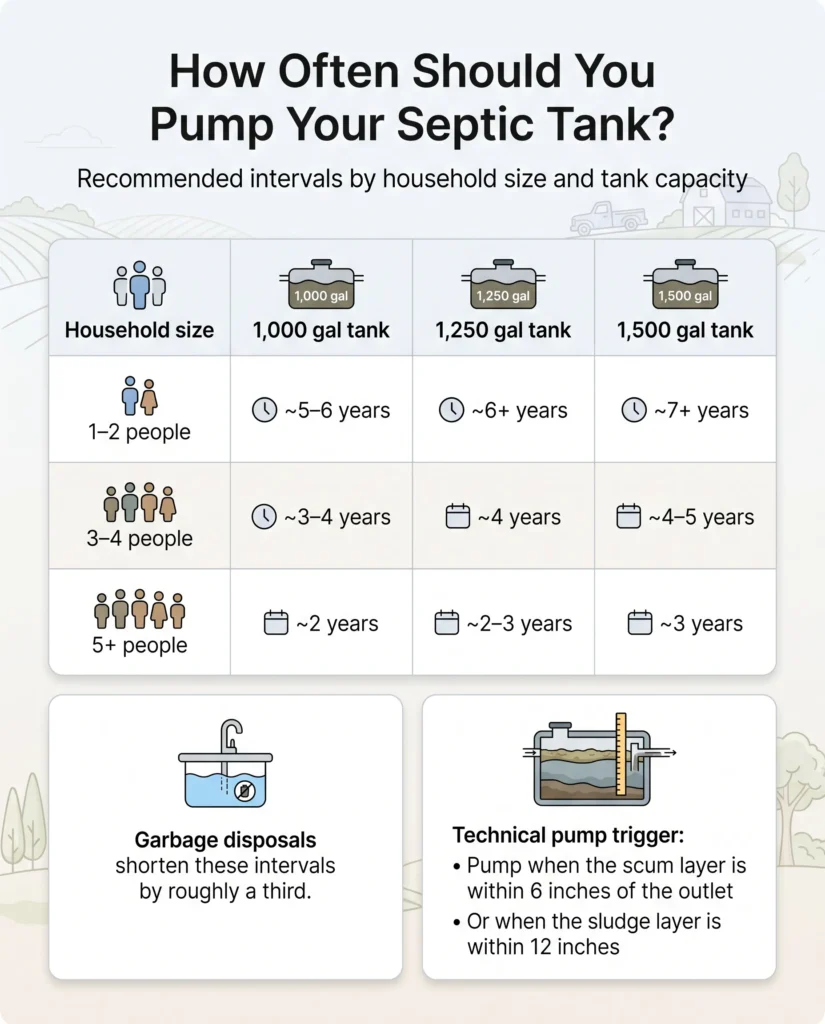
The standard guidance is every 3–5 years, but the honest answer is a function of tank size and household size:
| Household size | 1,000 gal tank | 1,250 gal tank | 1,500 gal tank |
|---|---|---|---|
| 1–2 people | ~5–6 years | ~6+ years | ~7+ years |
| 3–4 people | ~3–4 years | ~4 years | ~4–5 years |
| 5+ people | ~2 years | ~2–3 years | ~3 years |
Garbage disposals shorten these intervals by roughly a third. The technical trigger is simple: the tank needs pumping when the scum layer is within 6 inches of the outlet, or the sludge layer within 12 inches — which is what the technician actually measures.
What happens during a pumping visit
A legitimate service will: locate and open the tank (both compartments if it’s a two-compartment tank — a common corner cut is pumping only one), remove all liquid and solids with agitation, do a quick visual on inlet/outlet baffles and the effluent filter, and note the tank’s condition. Ask for the scum/sludge measurements before pumping — it calibrates your real interval — and get the receipt with tank size noted; many counties keep pumping records tied to the property.
The two upsells to treat with skepticism
“You need additives after every pumping.” A normally functioning residential septic system does not need routine bacterial, enzyme, or chemical additives. EPA says onsite wastewater systems already contain the microorganisms needed to function properly, and some additive products can be ineffective or even interfere with system operation or the environment. Additives do not replace inspection or pumping. For the full evidence review, see our septic tank maintenance guide.
“Your tank should be pumped every year.” For a typical family on a properly sized tank, annual pumping does nothing but raise your septic tank pumping cost — and pumping a healthy tank too often isn’t better for it. Match the table above to your household instead. (Aerobic treatment units are the exception: they follow their own state-mandated inspection schedules — see the septic care hub.)
Signs you shouldn’t wait for the schedule
Slow drains throughout the house (not just one fixture), gurgling plumbing, sewage odors indoors or over the tank, standing water or lush green stripes over the drainfield, or a high-water alarm. Any of these means book a pumping and inspection now — and if sewage is backing up into the house, stop using water entirely until the tank is pumped.
FAQ
How do I know when my septic tank is full?
Functionally, a tank is always “full” of liquid — what matters is solids. It needs pumping when sludge and scum layers approach the outlet, roughly every 3–5 years for most families, or immediately if you see backup symptoms.
Can I pump my septic tank myself?
No. Beyond needing a vacuum truck and a licensed disposal site, open septic tanks produce gases that kill several would-be DIYers every year. This is one of the few jobs on this site that is never DIY.
Does homeowners insurance cover septic pumping?
Routine pumping, no — it’s maintenance. Sudden damage to the system may be covered depending on cause and policy; neglect-related failure almost never is, which is another argument for keeping pumping receipts.
How long does septic pumping take?
With accessible lids, 30–60 minutes for a standard tank, plus locating/digging time if the lids are buried. Factor that quick visit into your overall septic tank pumping cost when budgeting for routine maintenance.